
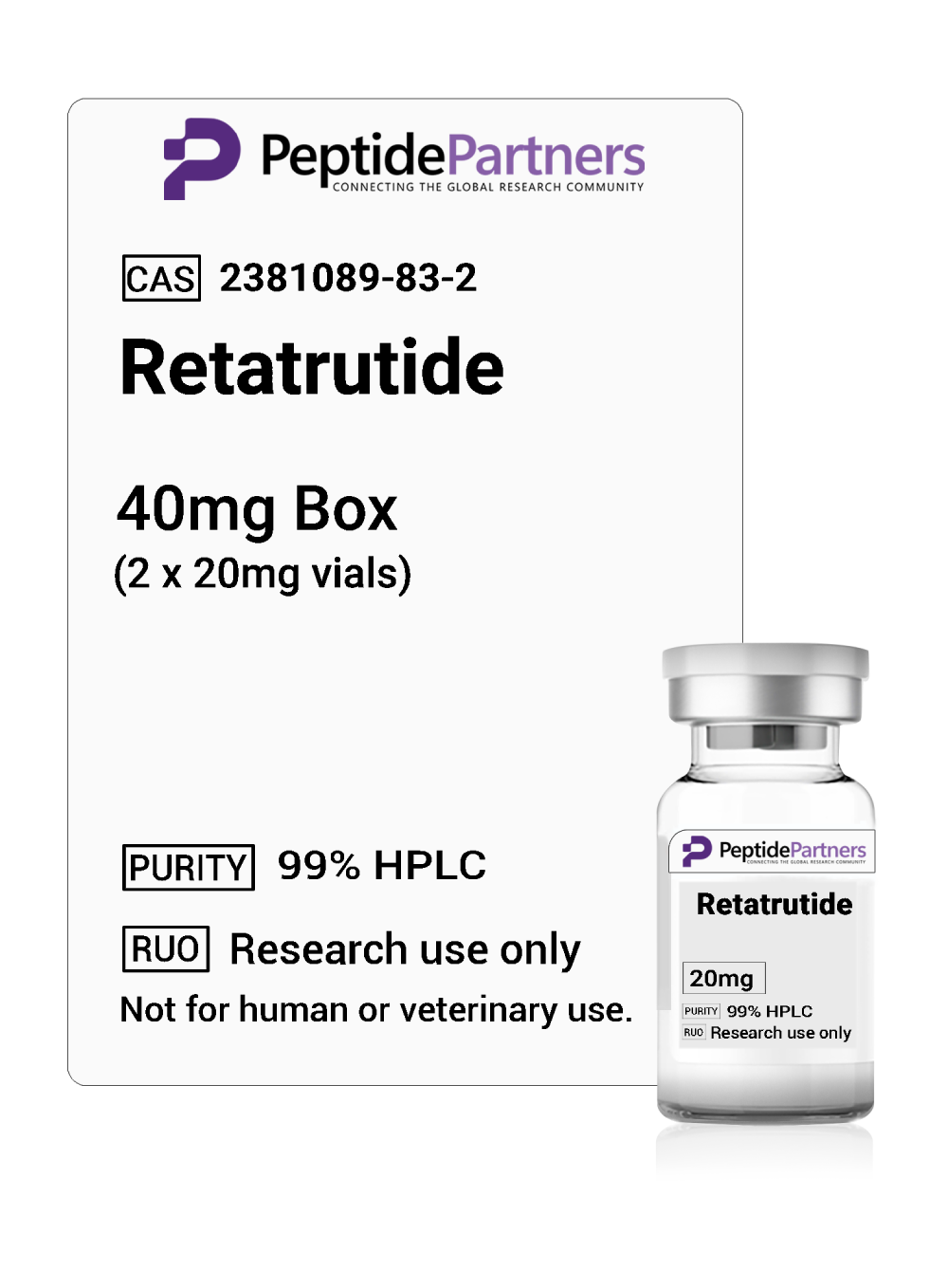
Retatrutide Kit (40mg – 400mg)
Price range: $199.00 through $1,420.00
Description
Retatrutide Kit
Save over 80%!
Swipe right to view full table →
 |
Peptide Sciences | Liberty Peptides | |
Cost per milligram |
$3.55 – $4.98 |
$18.40 | $14.40 |
Purity |
99.87% |
98.8% | 99.83% |
Certified Endotoxin-safe |
Yes |
No | No |
Independently Tested |
Yes |
No | No |
Peptide Partners Manufacturer Id: DF05
Batch Id: RP20251001
Note: the purity results were adjusted by the lab to omit the amino acid Glycine which is not typically considered an impurity as it is used to protect the integrity of the peptide during lyophilization

Overview
(For educational purposes only)
Mechanism of Action and Pharmacological Profile
Retatrutide works through a unique triple-receptor activation mechanism that distinguishes it from existing treatments for obesity and metabolic disorders.
Triple Receptor Agonism
The defining characteristic of retatrutide is its simultaneous activation of three key metabolic hormone receptors:
1. GLP-1 Receptor: Activation increases insulin secretion in a glucose-dependent manner, reduces glucagon secretion, delays gastric emptying, and decreases appetite through central nervous system effects
2. GIP Receptor: Stimulates insulin secretion and enhances the body’s response to glucose while potentially improving lipid metabolism
3. Glucagon Receptor: Activation increases energy expenditure and lipid oxidation, which complements the anorectic effects of GLP-1 receptor activation
This triple agonism approach is designed to address multiple aspects of metabolic dysfunction simultaneously, potentially offering superior efficacy compared to single or dual receptor agonists[1][2].
Metabolic Effects
Lipidomic profiling reveals that retatrutide induces significant changes in energy metabolism:
· Increases in 3-hydroxybutyrate (3-HB) and 3-hydroxybutyrylcarnitine (C4OH) at 24 weeks
· Elevation of acetylcarnitine-to-free carnitine ratio (C2/C0) and medium-chain acylcarnitines
· Preferential reduction of short-chain and saturated triglyceride species
· Decrease in total dihydroceramides (DhCers) by 20.1% with the 12 mg dose[3]
These metabolic changes suggest increased adipose tissue lipolysis and enhanced fat oxidation, contributing to improved insulin sensitivity and reduced hepatic steatosis[3]. The molecule’s ability to influence multiple metabolic pathways likely explains its profound effects on body weight and metabolic parameters.
Clinical Efficacy in Weight Management
Retatrutide has demonstrated exceptional efficacy for weight reduction in phase 2 clinical trials, establishing new benchmarks for pharmacological weight management.
Phase 2 Results in Obesity
A 48-week phase 2 randomized, placebo-controlled trial evaluated retatrutide in adults with obesity (BMI ≥30 kg/m²) or overweight (BMI 27-30 kg/m²) with at least one weight-related condition. The study demonstrated dose-dependent weight loss:
· 1 mg group: 8.7% reduction from baseline
· 4 mg combined group: 17.1% reduction
· 8 mg combined group: 22.8% reduction
· 12 mg group: 24.2% reduction
· Placebo group: 2.1% reduction[4]
These results represent substantial improvements over existing obesity medications, with the highest dose producing nearly a quarter reduction in body weight over 48 weeks.
Categorical Weight Loss Achievement
The percentage of participants achieving clinically significant weight loss thresholds was equally impressive:
· ≥5% weight loss: 92% (4 mg), 100% (8 mg), 100% (12 mg), 27% (placebo)
· ≥10% weight loss: 75% (4 mg), 91% (8 mg), 93% (12 mg), 9% (placebo)
· ≥15% weight loss: 60% (4 mg), 75% (8 mg), 83% (12 mg), 2% (placebo)[4][5]
Perhaps most remarkable was that 100% of participants receiving the 8 mg or 12 mg doses achieved at least 5% weight loss, a threshold associated with clinically meaningful health improvements[5].
Effects on Liver Health and Metabolic Dysfunction
Retatrutide has shown particularly promising results for reducing liver fat and improving metabolic dysfunction-associated steatotic liver disease (MASLD, formerly known as NAFLD).
Liver Fat Reduction
A substudy of the phase 2 obesity trial examined participants with MASLD and baseline liver fat ≥10% as measured by MRI-PDFF:
· Mean relative liver fat change from baseline at 24 weeks:
o 1 mg: -42.9%
o 4 mg: -57.0%
o 8 mg: -81.4%
o 12 mg: -82.4%
· Similar reductions were maintained at 48 weeks:
o 1 mg: -51.3%
o 4 mg: -59.0%
o 8 mg: -81.7%
o 12 mg: -86.0%
o Placebo: -4.6%[1]
Normalization of Liver Fat
The proportion of participants achieving normal liver fat levels (<5%) increased with dose and treatment duration:
· At 24 weeks: 27% (1 mg), 52% (4 mg), 79% (8 mg), 86% (12 mg), 0% (placebo)
· At 48 weeks: 57% (1 mg), 29% (4 mg), 89% (8 mg), 93% (12 mg), 0% (placebo)[1][6]
These results demonstrate remarkable efficacy in resolving hepatic steatosis, with more than 85% of participants on the highest doses achieving liver fat normalization by 48 weeks[1].
Correlations with Metabolic Improvements
Liver fat reduction was significantly correlated with other metabolic improvements:
· Strong correlation with body weight reduction (r=0.774, p<0.001)
· Significant correlation with waist circumference reduction (r=0.588, p<0.001)
· Near-maximal liver fat reduction achieved at approximately 20% body weight loss[1]
These findings suggest that retatrutide’s effects on liver fat are linked to its broader metabolic benefits, potentially offering a comprehensive approach to treating MASLD.
Cardiovascular and Metabolic Effects
Beyond weight reduction and liver fat improvement, retatrutide demonstrates beneficial effects on various cardiovascular and metabolic parameters.
Blood Pressure Reduction
A meta-analysis of phase 2 trials examined retatrutide’s impact on blood pressure:
· 8 mg dose (starting at 4 mg): Reduced systolic blood pressure by 9.13 mmHg and diastolic blood pressure by 2.45 mmHg
· Pooled data across effective doses: Reduced systolic blood pressure by 7.64 mmHg and diastolic blood pressure by 2.33 mmHg[7]
These blood pressure reductions are clinically significant and may contribute to reduced cardiovascular risk in patients with obesity.
Lipid Profile Improvements
Treatment with retatrutide resulted in favorable changes to lipid profiles:
· Reduced triglycerides, with bias toward reduction in short-chain and saturated species
· Decreased LDL and VLDL cholesterol
· Improved markers associated with enhanced insulin sensitivity and reduced systemic inflammation[3]
These changes in lipid metabolism may contribute to retatrutide’s cardiometabolic benefits and warrant further investigation for potential cardiovascular outcome benefits.
Dosing and Administration
Retatrutide is administered as a once-weekly subcutaneous injection, with a careful titration schedule designed to minimize side effects.
Dosing Recommendations
Based on phase 2 trials, the following dosing strategy has been employed:
· Starting dose: Typically 0.5 mg once weekly, with gradual increases
· Titration phase: Progressive increases to 1 mg, 2 mg, 4 mg, and potentially up to the maximum dose of 12 mg weekly
· Maintenance dose: Once the target or maximum tolerated dose is reached, patients continue at that level for ongoing treatment[8]
Titration Strategy
The gradual dose escalation approach serves several purposes:
· Minimizes gastrointestinal side effects through gradual adaptation
· Allows for monitoring of tolerability at each dose level
· Provides flexibility to pause or slow titration if side effects emerge
· Different starting doses (2 mg vs 4 mg) were tested, with lower starting doses showing better tolerability[4][8]
Following the recommended titration schedule is crucial for maximizing patient adherence and treatment success.
Safety Profile and Side Effects
The safety profile of retatrutide appears similar to other GLP-1 receptor agonists, with predominantly gastrointestinal adverse events.
Common Adverse Events
In clinical trials, the most frequently reported side effects were gastrointestinal:
· Nausea
· Diarrhea
· Vomiting
· Constipation
· Abdominal discomfort
These symptoms were typically mild to moderate in severity and often occurred primarily during dose escalation phases[4][9].
Cardiovascular Effects
Dose-dependent increases in heart rate were observed with retatrutide:
· Heart rate increases peaked at approximately 24 weeks
· Gradually declined thereafter while remaining elevated above baseline
· This pattern is similar to that observed with other GLP-1 receptor agonists[4]
The clinical significance of these heart rate changes requires further evaluation in larger and longer-term studies.
Mitigating Side Effects
Several strategies have proven effective for managing adverse events:
· Starting with lower doses (e.g., 0.5 mg) rather than higher doses
· Implementing gradual dose escalation with adequate time between increases
· Maintaining patients at current doses longer when side effects emerge
· Monitoring and providing supportive care for gastrointestinal symptoms[8]
These approaches can significantly improve tolerability and adherence to the medication regimen.
Current Development Status and Future Directions
As of early 2025, retatrutide remains an investigational agent with promising phase 2 results and ongoing development efforts.
Current Status
· Successfully completed phase 2 trials for obesity and related metabolic conditions
· Demonstrated exceptional efficacy for weight reduction and metabolic improvements
· Phase 3 trials are likely ongoing or planned to confirm efficacy and safety in larger populations
Future Research Directions
Several areas of ongoing and future research may further establish retatrutide’s role in metabolic medicine:
· Cardiovascular outcomes studies to assess impact on major adverse cardiovascular events
· Direct comparisons with established obesity medications like semaglutide and tirzepatide
· Long-term studies to evaluate durability of weight loss and metabolic benefits
· Investigation of potential benefits in related conditions such as heart failure with preserved ejection fraction[7]
The potential applications for treating metabolic dysfunction-associated steatotic liver disease also merit further exploration given the remarkable liver fat reductions observed in phase 2 trials[1][6].
Conclusion
Retatrutide represents a significant advancement in the pharmacological treatment of obesity and metabolic disorders. As the first triple hormone receptor agonist targeting GIP, GLP-1, and glucagon receptors, it offers a unique mechanism of action with complementary effects on multiple aspects of metabolism.
Phase 2 clinical trials have demonstrated exceptional efficacy for weight reduction, with up to 24.2% weight loss at 48 weeks with the highest dose—results that exceed those typically observed with existing GLP-1 receptor agonists. Equally impressive are the medication’s effects on liver fat, with normalization of liver fat in more than 85% of participants with MASLD on higher doses.
The safety profile appears manageable, with predominantly gastrointestinal side effects that are partially mitigated through dose titration. Cardiovascular effects include beneficial blood pressure reductions, though increased heart rate warrants further evaluation in longer-term studies.
As retatrutide progresses through clinical development, it has the potential to significantly expand treatment options for obesity, type 2 diabetes, and metabolic dysfunction-associated steatotic liver disease. Its robust efficacy profile suggests it may become a valuable addition to the therapeutic armamentarium for these challenging and prevalent metabolic conditions.
⁂
1. https://www.aasld.org/the-liver-meeting/triple-hormone-receptor-agonist-retatrutide-resolves-steatosis-85-subjects-masld
2. https://pubmed.ncbi.nlm.nih.gov/38858523/
3. https://diabetesjournals.org/diabetes/article/73/Supplement_1/117-OR/155460/117-OR-Effects-of-Triple-Hormone-Receptor-Agonist
4. https://pubmed.ncbi.nlm.nih.gov/37366315/
5. https://diabetes.org/newsroom/american-diabetes-association-highlights-novel-agent-retatrutide-results-substantial-weight-reduction-people-with-obesity-type-2-diabetes-during-late-breaking-symposium
6. https://www.nature.com/articles/s41591-024-03018-2
7. https://www.jacc.org/doi/10.1016/S0735-1097(24)03870-1
8. https://canadianinsulin.com/articles/navigating-the-retatrutide-dosage-chart-for-safe-dosing/
9. https://www.adameetingnews.org/phase-2-trial-results-demonstrate-benefits-of-retatrutide-in-obesity-type-2-diabetes-nash/
Additional information
| Quantity (mg) | 40mg, 100mg, 200mg, 400mg |
|---|
Related products
-

Tirzepatide Kit (80mg – 800mg)
Price range: $224.00 through $1,520.00 Select options This product has multiple variants. The options may be chosen on the product page -

Oxytocin Acetate
$180.00 Select options This product has multiple variants. The options may be chosen on the product page -
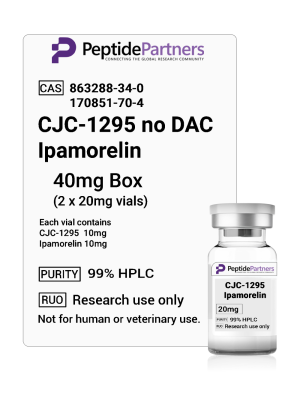
Combo Vial: CJC-1295 no DAC/Ipamorelin Kit (40mg – 200mg)
Price range: $198.00 through $796.00 Select options This product has multiple variants. The options may be chosen on the product page -
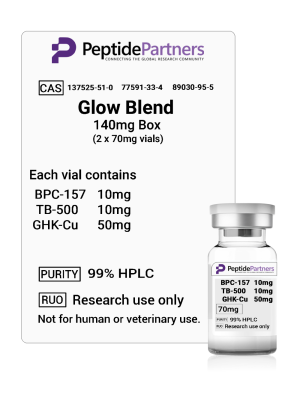
Glow Blend: BPC-157/TB-500/GHK-Cu
Price range: $224.00 through $840.00 Select options This product has multiple variants. The options may be chosen on the product page

Reviews
There are no reviews yet.