
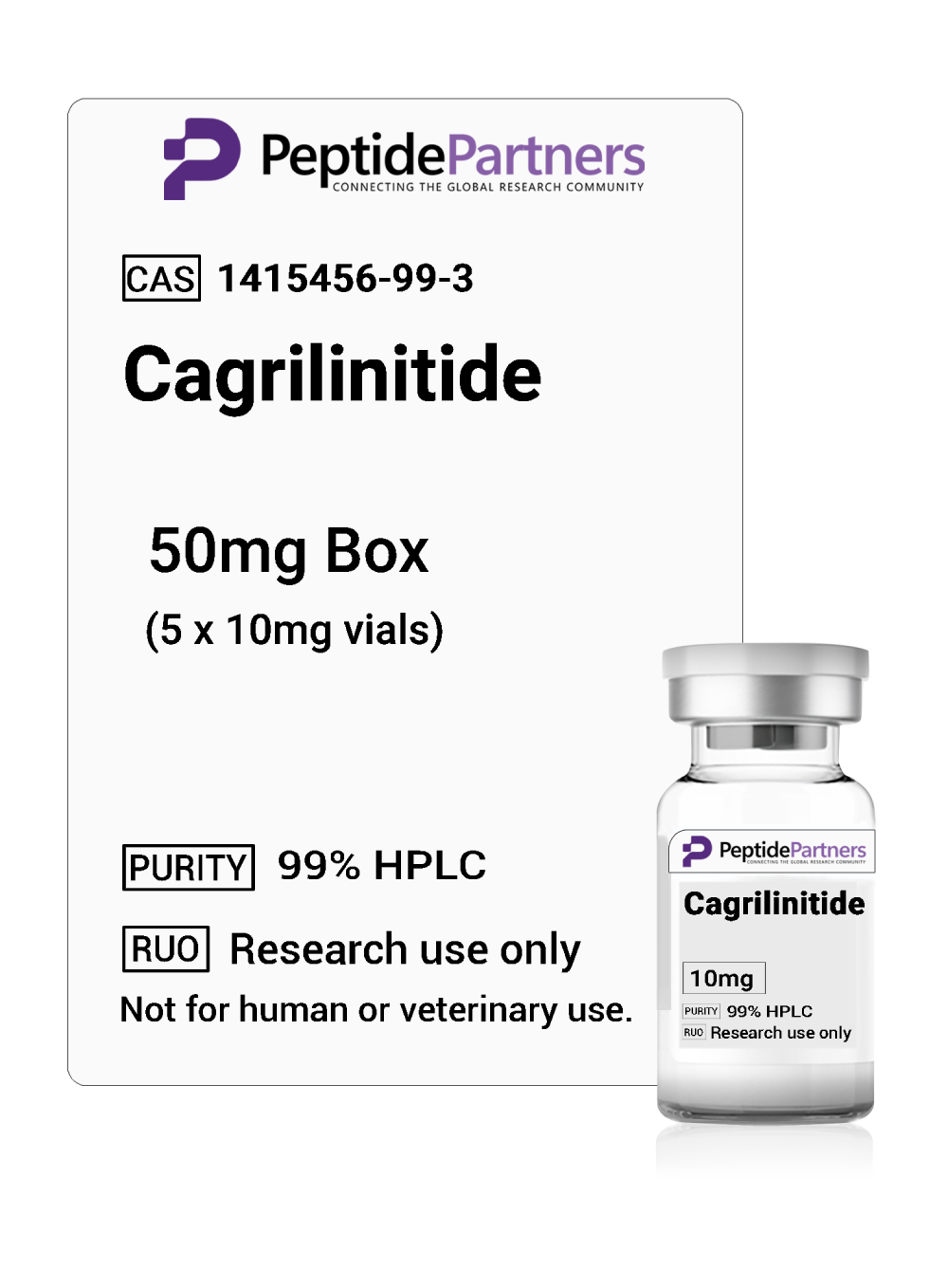
Cagrilintide (50mg – 100mg)
Price range: $185.00 through $300.00
Description
Cagrilintide
Save over 65%!
Swipe right to view full table →
 |
Peptide Sciences | Liberty Peptides | |
Cost per milligram |
$3.00 – $3.70 |
$15.50 | $16.00 |
Purity |
99.86% |
98.6% | 99.88% |
Independently Tested |
Yes |
No | No |
Peptide Partners Manufacturer Id: EJ12
Overview
(For educational purposes only)
Molecular Structure and Mechanism of Action
Cagrilintide (AM833 or NN0174-0833) is a structurally modified synthetic peptide designed to mimic the effects of naturally occurring amylin, a hormone co-secreted with insulin from pancreatic beta cells.
Chemical Structure and Modifications
The development of cagrilintide involved strategic modifications to enhance its therapeutic potential:
· The peptide features specific amino acid substitutions (14E, 17R, 25P, 28P, 29P, 37P) relative to human amylin[1]
· It contains a C20 diacid lipidation at its N-terminus with a γGlu linker to extend its half-life[1]
· Unlike GLP-1 receptor agonists, cagrilintide can be N-terminally lipidated without sacrificing potency, likely due to structural differences in how it interacts with its receptor[1]
· The peptide is designed for increased stability, metabolic durability, and reduced risk of fibril formation compared to native amylin[1]
Molecular studies suggest the N-terminus of the amylin peptide forms a loop that points away from the transmembrane domain, allowing it to tolerate N-terminal lipidation, unlike GLP-1 which penetrates the transmembrane domain as an α-helix[1].
Physiological Mechanisms
Cagrilintide functions as a dual amylin and calcitonin receptor agonist, exerting multiple complementary effects on metabolism and energy regulation:
1. Appetite Regulation: By activating amylin receptors in both homeostatic and hedonic regions of the brain, cagrilintide signals satiety and reduces appetite, decreasing the tendency to overeat[2][3]
2. Delayed Gastric Emptying: The peptide slows the movement of food through the digestive tract, prolonging feelings of fullness after meals[3]
3. Blood Glucose Stabilization: Working in tandem with insulin, cagrilintide helps smooth out blood sugar fluctuations, potentially reducing insulin resistance[3]
4. Metabolic Enhancement: Cagrilintide may influence protein-protein interactions in metabolic pathways, further contributing to its effectiveness in managing metabolic health[3]
The extended plasma half-life of cagrilintide, facilitated by its strong albumin binding properties, allows for convenient once-weekly dosing, similar to the pharmacokinetic profile of semaglutide[1].
Clinical Efficacy in Weight Management
Cagrilintide has demonstrated significant efficacy for weight management in multiple clinical trials, both as monotherapy and in combination with semaglutide.
Monotherapy Results
In a 26-week randomized controlled trial involving participants with overweight or obesity, cagrilintide demonstrated dose-dependent weight reduction:
· Mean weight reductions from baseline ranged from 6.0% with 0.3 mg to 10.8% with 4.5 mg, compared to 3.0% with placebo[4][5]
· All tested doses (0.3 mg, 0.6 mg, 1.2 mg, 2.4 mg, and 4.5 mg) showed statistically significant weight loss compared to placebo (estimated treatment difference range: −3.0% to −7.8%)[4]
· Notably, the highest dose (4.5 mg) demonstrated superior weight loss compared to the GLP-1 receptor agonist liraglutide 3.0 mg[4][5]
· Weight reduction appeared to be progressive throughout the treatment period, suggesting the possibility of further benefits with extended therapy[4]
These results established cagrilintide as an effective standalone agent for weight management, with efficacy exceeding that of some existing treatments.
Combination Therapy Results (CagriSema)
The most striking results have been observed with CagriSema, the fixed-dose combination of cagrilintide and semaglutide. In the REDEFINE 1 phase 3 trial, which included 3,417 randomized participants with obesity or overweight with comorbidities:
· In the treatment adherence analysis, CagriSema produced a remarkable 22.7% weight loss after 68 weeks, compared to 11.8% with cagrilintide 2.4 mg alone, 16.1% with semaglutide 2.4 mg alone, and 2.3% with placebo[6]
· In the intention-to-treat analysis, CagriSema achieved 20.4% weight loss versus 11.5% with cagrilintide 2.4 mg, 14.9% with semaglutide 2.4 mg, and 3.0% with placebo[6]
· An impressive 40.4% of patients who received CagriSema reached a weight loss of 25% or more after 68 weeks, compared to only 6.0% with cagrilintide 2.4 mg, 16.2% with semaglutide 2.4 mg, and 0.9% with placebo[6]
These results position CagriSema as one of the most effective pharmacological approaches to weight management, with efficacy approaching that of some bariatric surgical procedures.
Efficacy in Type 2 Diabetes
Beyond weight management, cagrilintide has shown promising results for glycemic control in type 2 diabetes, particularly in combination with semaglutide.
In a 32-week, multicentre, double-blind phase 2 trial involving adults with type 2 diabetes:
· CagriSema reduced HbA1c by 2.2 percentage points, compared to 1.8 percentage points with semaglutide alone and 0.9 percentage points with cagrilintide alone[7]
· CagriSema demonstrated significantly greater HbA1c reduction versus cagrilintide (estimated treatment difference -1.3 percentage points; p<0.0001), though the difference versus semaglutide did not reach statistical significance (-0.4 percentage points; p=0.075)[7]
· Mean weight loss was substantially greater with CagriSema (-15.6%) compared to either semaglutide (-5.1%) or cagrilintide (-8.1%) alone (p<0.0001 for both comparisons)[7]
· Time in target glucose range (3.9-10.0 mmol/L) improved dramatically with CagriSema, from 45.9% at baseline to 88.9% at week 32[7]
These findings suggest that CagriSema could provide comprehensive benefits for patients with type 2 diabetes, simultaneously addressing weight management and glycemic control.
Safety Profile and Tolerability
Clinical trials have established a generally favorable safety profile for cagrilintide, with adverse events consistent with other peptide therapies for metabolic disorders.
Common Adverse Events
As with most agents in this therapeutic class, gastrointestinal side effects predominate:
· In monotherapy trials, 41%-63% of participants receiving cagrilintide experienced gastrointestinal adverse events, compared to 32% with placebo[5]
· Nausea was most common, affecting 20%-47% of cagrilintide recipients versus 18% with placebo[5]
· These effects were typically mild to moderate in severity and often diminished over time with continued treatment[6][5]
Comparative Safety Analysis
In the REDEFINE 1 trial, CagriSema demonstrated an acceptable safety profile consistent with its component medications:
· The vast majority of adverse events were mild to moderate and decreased in intensity over time[6]
· No unexpected safety signals were identified compared to the established profiles of cagrilintide and semaglutide individually[6]
In the diabetes trial, adverse events were reported by similar proportions of participants across treatment groups: 68% with CagriSema, 71% with semaglutide, and 80% with cagrilintide[7]. Importantly, no severe hypoglycemia or fatal adverse events were reported[7].
Current Development Status
Cagrilintide represents an active area of clinical development, with significant progress in recent years:
· The combination product CagriSema entered Phase III clinical trials in 2023[8]
· In December 2024, Novo Nordisk announced positive results from REDEFINE 1, a key Phase III trial in their global REDEFINE program[6]
· A future trial sponsored by Novo Nordisk is planned to compare CagriSema and tirzepatide head-to-head[8]
· In Phase II trials, CagriSema demonstrated weight loss comparable in efficacy to tirzepatide (-15.6% after 32 weeks)[8]
These developments suggest that cagrilintide, particularly in combination with semaglutide, is positioned to potentially become a leading treatment option for obesity and related metabolic disorders.
Rationale for Combination Therapy
The remarkable efficacy of CagriSema highlights the value of combination therapy in addressing the complex pathophysiology of obesity and metabolic disorders.
Cagrilintide and semaglutide act through separate but complementary mechanisms:
· Amylin (mimicked by cagrilintide) induces satiety via both homeostatic and hedonic regions of the brain[2]
· GLP-1 (mimicked by semaglutide) reduces appetite via GLP-1 receptors in the hypothalamus, increases insulin production, reduces glucagon secretion, and delays gastric emptying[2]
· These distinct but related mechanisms of action appear to have an additive effect on appetite reduction and weight loss[2]
Given the heterogeneity and complex pathogenesis of obesity, combination therapy targeting multiple physiological pathways represents a logical approach to enhancing treatment efficacy[2].
Conclusion
Cagrilintide represents a significant advancement in the pharmacological management of obesity and metabolic disorders. As a long-acting amylin analog, it offers a novel mechanism of action that complements existing therapies, particularly GLP-1 receptor agonists like semaglutide.
The most promising application appears to be in combination therapy, where CagriSema has demonstrated unprecedented weight loss efficacy, with participants achieving an average of 20-23% weight reduction over 68 weeks and more than 40% reaching the remarkable threshold of ≥25% weight loss.
With an acceptable safety profile characterized primarily by manageable gastrointestinal side effects, cagrilintide—particularly in its combined formulation with semaglutide—represents a promising addition to the therapeutic armamentarium for obesity and type 2 diabetes. As Phase III trials continue and regulatory decisions approach, cagrilintide may soon offer new hope to the millions of individuals worldwide struggling with these challenging conditions.
⁂
1. https://pubs.acs.org/doi/10.1021/acs.jmedchem.1c00565
2. https://pubmed.ncbi.nlm.nih.gov/36883831/
3. https://www.yoodirecthealth.com/blog/cagrilintide-a-breakthrough-in-peptide-therapy-for-metabolic-health-and-weight-management/
4. https://discovery.ucl.ac.uk/id/eprint/10155031/2/Batterham_Once-weekly cagrilintide for weight management in people with overweight and obesity_AAM.pdf
5. https://www.thelancet.com/journals/lancet/article/PIIS0140-6736(21)01751-7/fulltext
6. https://www.novonordisk.com/news-and-media/news-and-ir-materials/news-details.html?id=915082
Additional information
| Quantity (mg) | 50mg, 100mg |
|---|
Related products
-
Sermorelin (20mg – 200mg)
Price range: $104.00 through $760.00 Select options This product has multiple variants. The options may be chosen on the product page -
Ipamorelin (20mg – 200mg)
Price range: $68.00 through $480.00 Select options This product has multiple variants. The options may be chosen on the product page -
Semaglutide Kit (50mg – 200mg)
Price range: $249.00 through $784.00 Select options This product has multiple variants. The options may be chosen on the product page -
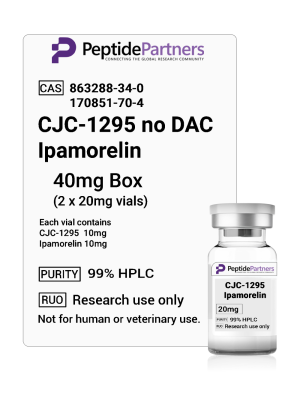
Combo Vial: CJC-1295 no DAC/Ipamorelin Kit (40mg – 200mg)
Price range: $198.00 through $796.00 Select options This product has multiple variants. The options may be chosen on the product page

Reviews
There are no reviews yet.